
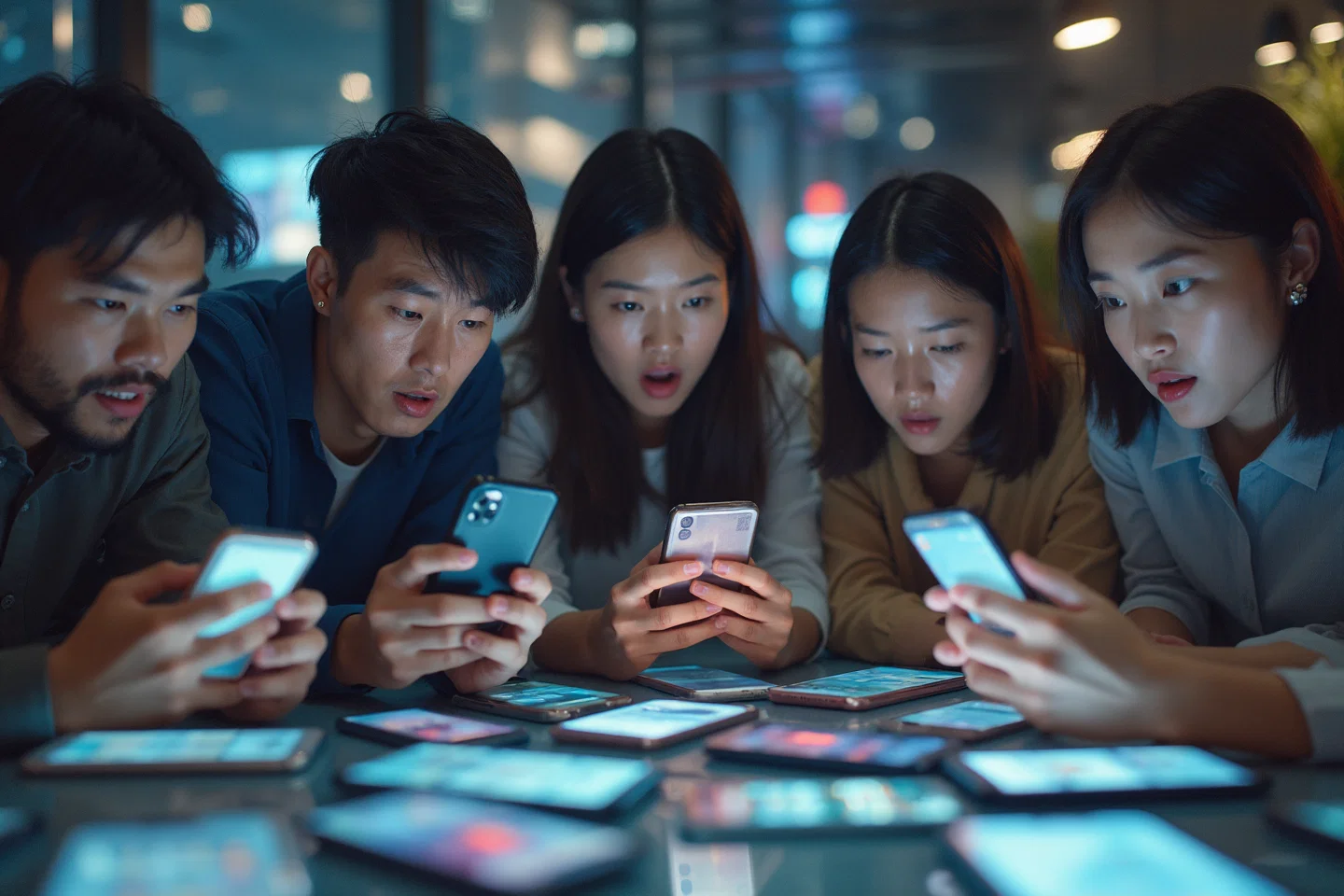
As the trade war between China and the United States continues to intensify, a new front is emerging: social media. Far from tariffs and political speeches, a new form of confrontation is unfolding on platforms like Douyin (TikTok in China), Xiaohongshu, and WeChat. And this time, the battleground is the luxury industry.
But why is the trade war extending into the digital world? And what are Chinese authorities really aiming for by exposing the behind-the-scenes of global luxury? A breakdown of a double-edged strategy.
Viral Videos as Weapons in a Trade War
On Chinese social networks, viral videos are everywhere: factory workers revealing how products strikingly similar to those of major Western luxury brands are made. Handbags, technical clothing, shoes — nothing is spared. These videos often claim that the products are made “in the same factories,” using identical materials, but sold at far more accessible prices.
This phenomenon is no accident. It fits into a trade war logic in which China seeks to expose the structural weaknesses of Western brands: their massive margins, their dependence on image, and their business model built more on prestige than on substance.
A Trade War Taking on a Digital Face
The trade war is no longer limited to customs duties or export restrictions. It is transforming into a war of image, and social media has become a strategic tool. By showcasing its manufacturing power, China is speaking both to its own citizens and to the rest of the world.
This tactic aims to reverse the balance of power: if the West taxes Chinese cars or electronic components, China responds by questioning the legitimacy of Western luxury products, while highlighting its own local know-how.
TikTok, Douyin & Co.: The Arenas of Modern Trade Warfare
In this trade war 2.0, platforms like Douyin and Xiaohongshu are the true battlegrounds. They allow China to reach a young, impressionable audience eager for “good deals” and transparency.
Videos exposing the practices of Western luxury brands go viral because they tap into current frustrations: excessive prices, overconsumption, misleading appearances. In this sense, China cleverly exploits the disenchantment of modern consumers to its advantage.
A Strategy That Redefines Luxury
What this digital trade war reveals is a transformation in the values associated with luxury. Today, rarity and exclusivity are no longer enough. Younger generations want to understand what they are buying, how it is made, and whether the price is justified.
China positions itself within this trend by offering an alternative narrative: products that are “almost identical,” at much lower prices. It is not just selling an object — but an ideology: that of an accessible, national luxury stripped of Western artifices.
Soft Power in Service of the Trade War
Behind this initiative lies a well-crafted political maneuver. China is using the trade war as a lever to impose its vision of the world, challenging the established order — even in symbolic sectors like fashion and lifestyle.
It is a way of saying: “We are not only the factory of the world — we are also its critical mirror.” By exposing the practices of Western luxury, China seeks to assert its economic and cultural independence.
Between Exposure and Counterfeiting: A Blurred Line
This digital trade war raises legal questions. Videos showing bags or clothing almost identical to those of major brands sometimes border on counterfeiting. Some Western brands have already reacted, reminding that only their official supply chains guarantee authenticity and ethics.
But in the context of a trade war, this legal ambiguity can become a weapon: it becomes harder to distinguish information from manipulation, or imitation from counterfeit.
Luxury Under Pressure from the Trade War
The trade war led by China goes far beyond the economic realm. It affects the very perception of value, brand identity, and consumer trust. By revealing the inner workings of luxury, it forces Western giants to justify themselves, reinvent themselves, or even defend themselves.
To survive, brands will have to prove that their prices reflect much more than a logo: real craftsmanship, ethics, and transparency. Because in this 21st-century trade war, storytelling is a weapon — and truth… a strategic asset.
To stay updated with our latest news and analyses, visit our blog and follow us on LinkedIn: Izemx, where digital meets geopolitics.